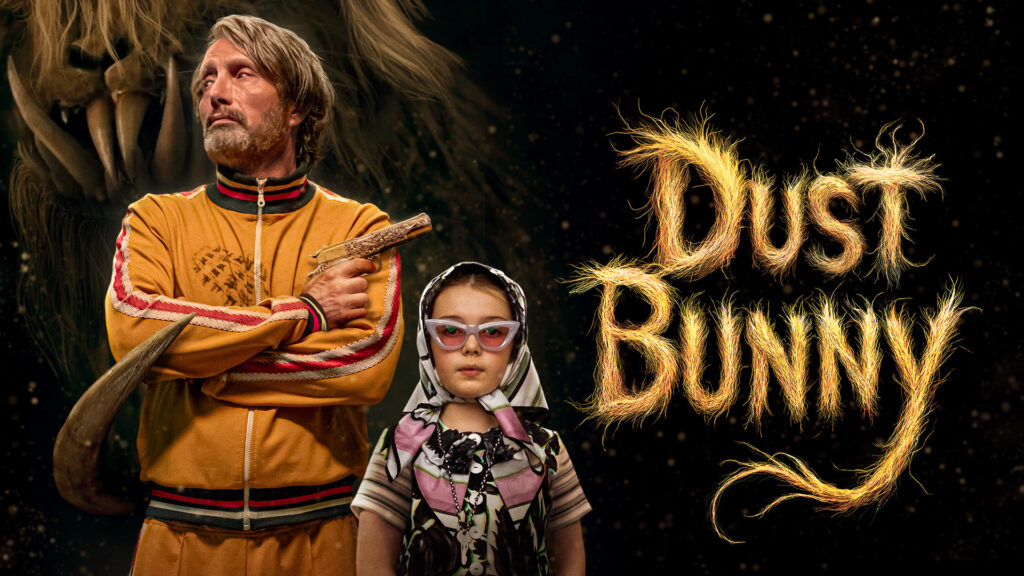
I recently spoke with Bryan Fuller about Dust Bunny (2025), his directorial debut and a fantasy thriller inspired by the gateway-horror films that shaped his love of cinema.
Known for his work as a writer and showrunner in television, Fuller brings a deeply personal visual and emotional sensibility to Dust Bunny. In our conversation, he reflected on returning to childhood cinematic influences, the importance of color and stylization, expressive camera movement, and how the film’s monsters were brought to life using both practical effects and CGI.
Before diving into the interview, here’s a brief look at the film.
What Is Dust Bunny (2025) About?
Dust Bunny is a fantasy thriller centered on a 10-year-old girl named Aurora who believes there is a monster living under her bed.
When Aurora begins to suspect that her neighbor may be a killer for hire, she decides to enlist his help to get rid of the creature haunting her room. From there, the story unfolds in unexpected, heartfelt, and often surprising ways.
Visually, the film stands out for its hyper-real, colorful cinematography, balancing bright, whimsical moments with darker, more suspenseful beats. Dust Bunny fully embraces its fantasy while remaining grounded in character, emotion, and classic storytelling — and it does not shy away from showing its monsters.
Exclusive Interview with Bryan Fuller
Prefer to watch the interview? Click here.
What made Dust Bunny the right story for your first feature as a director?
This story actually started as an Amazing Stories episode. When it didn’t move forward, I realized it would make a really good movie. Those episodes were designed to feel like Amblin films from the 1980s, which were such a huge part of my childhood and my love of cinema.
Those movies were gateway horror — stories with children in danger like The Goonies, E.T., and Gremlins. They felt like an evolution of the childhood horror stories I grew up with, like The Wizard of Oz and Disney fairy tales. For my first feature, I wanted to return to my first loves of cinema, which were those children’s horror stories.
How did you approach color and brightness in the film’s cinematography?
I’m not really known for my restraint, so pulling back wasn’t always part of my agenda. It was more about pushing further. I knew that if the world was going to be stylized — if the wardrobe and the storytelling were heightened — then the performances had to be authentic and grounded.
As long as the performances feel real and the characters feel like real people, the world around them has permission to be a little extra. That balance allowed me to lean into all the color and stylization while still creating a genuine emotional experience for the audience.
What inspired the smooth camera movements throughout the film?
If you look back at early cinema, when filmmakers were first discovering what cameras could do, the movement was incredibly ambitious. Early cinema was very expressive because everyone was excited about this new tool.
I believe camera movement is emotional. What you do with the camera has a psychological impact on the audience. I love filmmakers like Sofia Coppola, who are so masterful with point of view. In Lost in Translation, you always know whose point of view you’re in because the camera tells you.
If the audience can’t physically lean into the story, the camera can do that for them. That movement becomes an emotional amplifier. I also love the elegance of smooth camera work — it feels classic and graceful in a way that handheld sometimes doesn’t.
How were the monsters in Dust Bunny brought to life?
It was a mix of both practical effects and CGI. I love monsters, especially the Jim Henson monsters from The Dark Crystal and Labyrinth. Having a physical presence was very important to me, especially because we were working with a ten-year-old lead.
It’s such a gift for an actor to see the monster instead of reacting to a green ball. One of my favorite days on set was introducing Sophie to the giant puppet built by the team at Legacy.
The puppet was huge — the head was as tall as I am, and the ears were just as tall on top of that. So if you’re seeing the head or ears, that’s practical. If you’re seeing the full body, that’s CGI, because we couldn’t afford to build the entire thing.
Final Thoughts on Bryan Fuller’s Dust Bunny (2025)
Dust Bunny feels like a genuine love letter to gateway horror — the kind of films that introduce young audiences to monsters, suspense, and cinematic wonder without overwhelming them. It’s visually striking, emotionally grounded, and clearly shaped by the stories that inspired Bryan Fuller’s love of filmmaking.
The film is available on demand and works especially well as a family movie night option for viewers looking to explore light horror with heart.
If you’d like to explore one of my favorite gateway horror films, you can read all about why the original Beetlejuice move is a classic here. Until next time, sending you ghouls and kisses!
Who is Bryan Fuller?
Bryan Fuller is a writer, producer, and director best known for his work in television, including Pushing Daisies and Hannibal. Dust Bunny (2025) marks his first feature film as a director.
Is Dust Bunny Bryan Fuller’s directorial debut?
Yes. Dust Bunny is Bryan Fuller’s first feature-length film as a director.
What genre is Dust Bunny (2025)?
The film is a fantasy thriller with strong gateway-horror elements.
Is Dust Bunny family-friendly?
The film is best described as gateway horror and is suitable for families looking to introduce kids to light, spooky storytelling.
Are the monsters in Dust Bunny practical or CGI?
Both. The film uses a combination of practical effects and CGI, including a large physical puppet for close-up monster interactions.
Where can I watch Dust Bunny (2025)?
Dust Bunny is available on demand.
